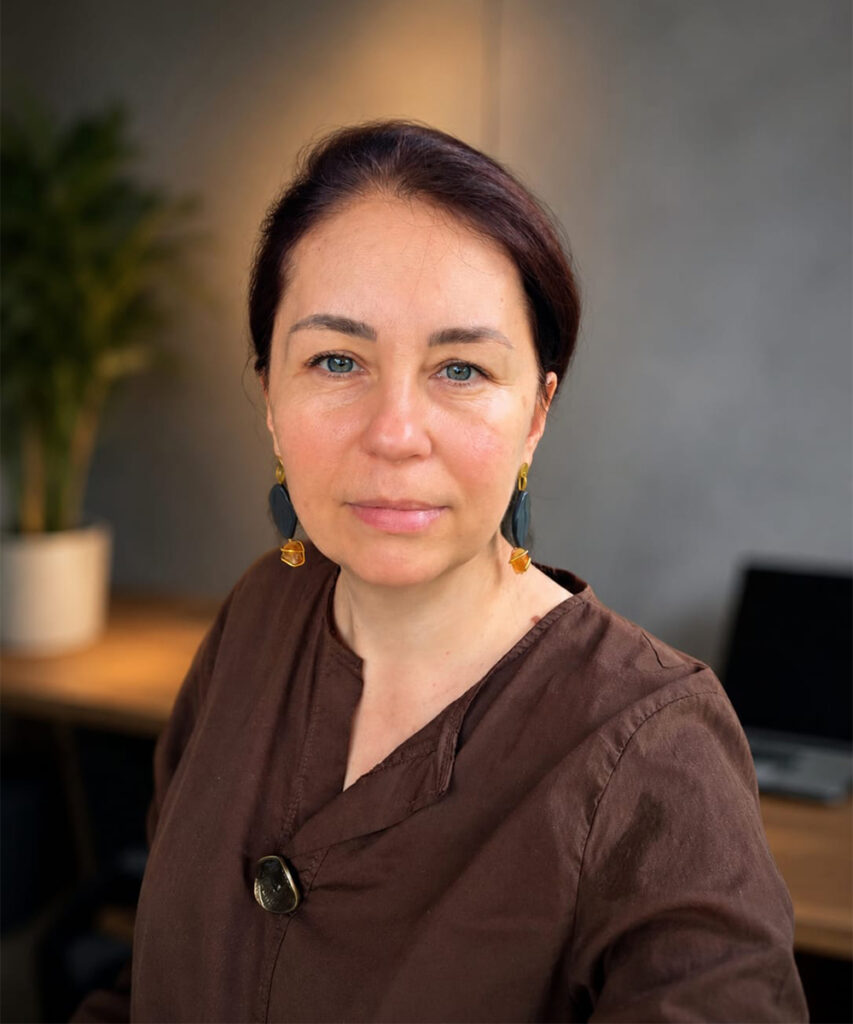
I knew since high school that I wanted to study psychology. But as a graduate in2002 in Romania,opportunities in this field were sparse. Therapy had yet to become as widely recognised a profession as it has today. So, I joined one of the country's best-known recruitment agencies, completed a Master's in HR and became Managing Partner in 2009. After over twenty years in this role, I’ve gained invaluable experience in understanding people their skills, characters, suitability to different roles and workplace cultures. It was when faced with a diagnosis of my own that I found myself turning that same attention inward.
In 2012 I received a life-changing diagnosis. I began searching for solutions outside of convention — alternative methods, therapies that weren't yet mainstream, and anything else that might accelerate my healing.. This led me to traditional Chinese medicine. Its practitioners treat the body, emotions and mind as one connected system rather than three separate problems. It formed the basis of my approach today: disease doesn't start in the body - it only manifests there. Lasting results demand the recognition that the physical, emotional, and mental are of equal significance when it comes to our health.
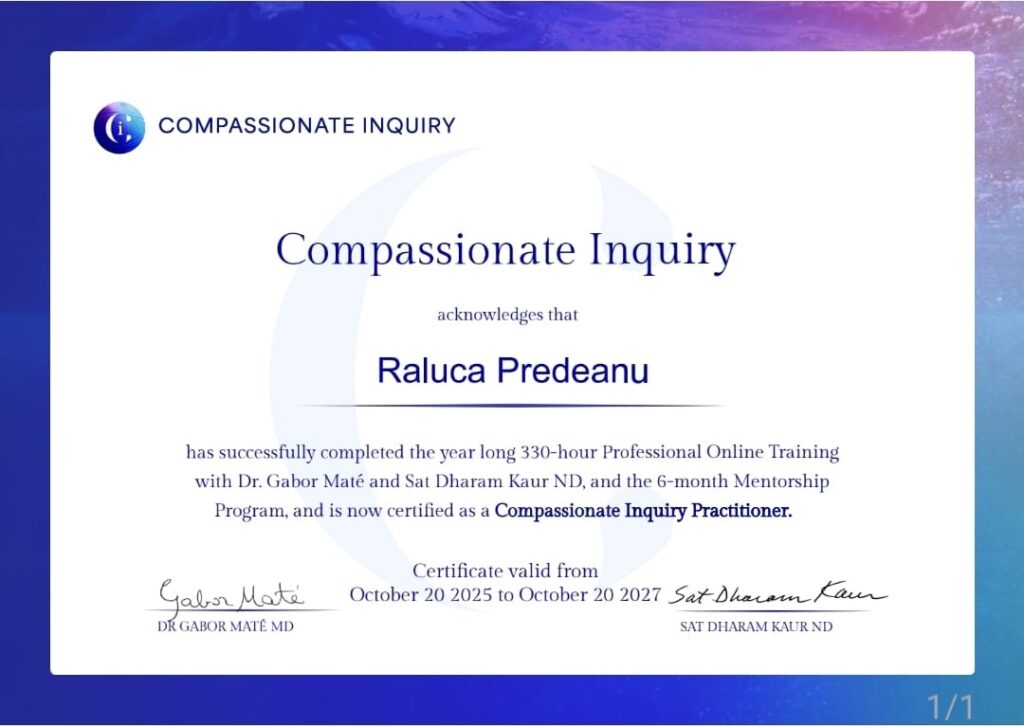
This conclusion is what brought me to Compassionate Inquiry. I trained under Dr. Gabor Maté and am now a certified Compassionate Inquiry Practitioner. Where my earlier work had been about symptoms and protocols, Compassionate Inquiry gave me a way to sit with the questions beneath them. It gave me the grounds to uncover the unconscious patterns, beliefs and survival strategies formed decades before my diagnosis.It's the approach I now build most of my practice around: not fixing a symptom, but gently uncovering/ giving space to what it's expressing. I'm currently training to become a Compassionate Inquiry Mentor — a next step within the CI community that deepens both my own practice and my ability to hold space for others doing this work.
I integrate both NARM (the NeuroAffective Relational Model) and Compassionate Inquiry into my sessions. NARM approaches the same territory as CI — developmental trauma — from the angle of the nervous system and attachment: how our earliest relationships shape our capacity to self-regulate, and how that shows up, years later, in the body and in our patterns of relating. Together, CI and NARM are the two pillars I work from.
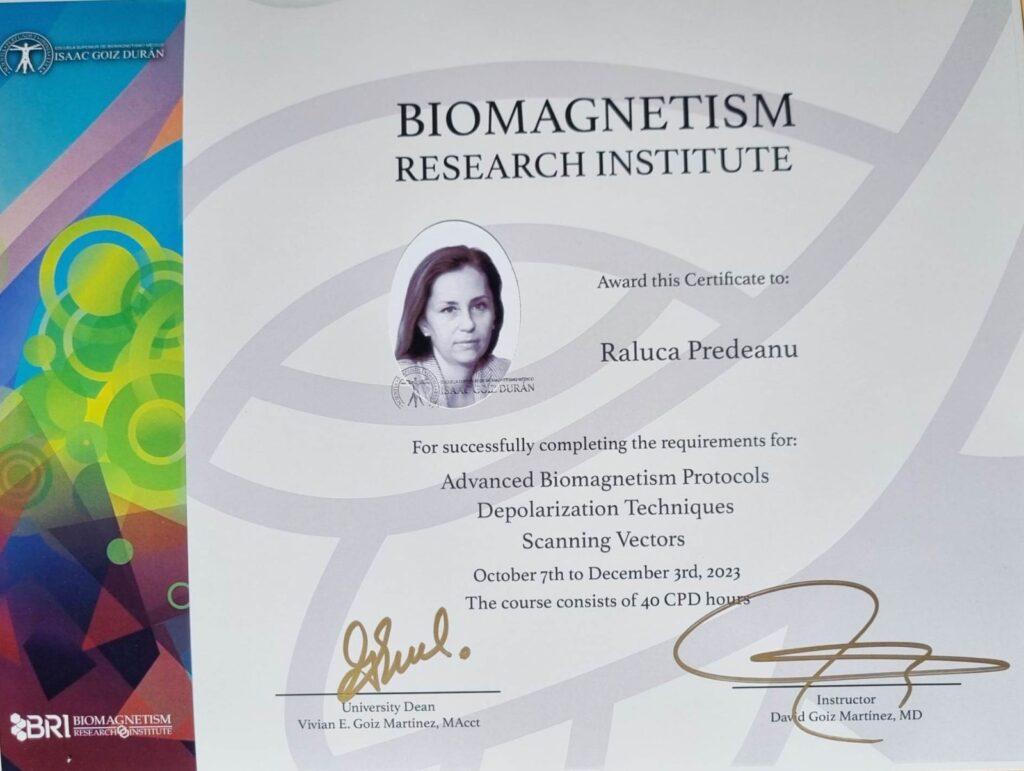
All of my experience feeds into my practice as it stands. Over twenty years in recruitment taught me to read people. My diagnosis brought me to alternative modalities of healing, and my training in BMP, Compassionate Inquiry and NARM has kept me there. My holistic approach stems from a deep understanding of health as a reflection of multiple factors: the body, the emotions and the mind.